
What are the key components of Printed circuit assembly services?
key components of Printed circuit assembly services
Printed circuit assembly services encompass a complex array of components and processes crucial for the creation of electronic devices. At the heart of these services lie several key components, each playing a vital role in the assembly process and the functionality of the final product.
First and foremost among these components are the printed circuit boards (PCBs) themselves. PCBs serve as the foundation upon which electronic components are mounted and interconnected. These boards are typically composed of layers of conductive material, such as copper, laminated onto a non-conductive substrate, such as fiberglass. The design and layout of the PCB determine the electrical connections between components, as well as the overall form factor and functionality of the electronic device.
Electronic components are the building blocks of any printed circuit assembly services. These include passive components such as resistors, capacitors, and inductors, which regulate the flow of electrical current and store energy. Active components such as transistors, diodes, and integrated circuits (ICs) are also essential, serving as switches, amplifiers, and signal processors. The selection and placement of these components are critical considerations in PCB assembly, as they determine the performance, reliability, and cost of the final product.
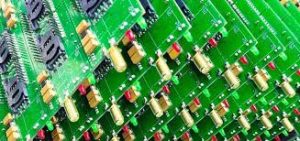
What are the key components of Printed circuit assembly services?
Surface mount technology (SMT) components are another key aspect of printed circuit assembly services. Unlike through-hole components, which are mounted by inserting leads into holes drilled in the PCB, SMT components are soldered directly onto the surface of the board. This method offers several advantages, including higher component density, improved electrical performance, and reduced manufacturing costs. SMT components come in a variety of packages, including resistors, capacitors, ICs, and discrete semiconductors, each requiring specialized equipment and techniques for assembly.
Printed circuit assembly services also rely on advanced machinery and equipment to automate the assembly process and ensure precision and consistency. Pick-and-place machines are used to accurately position surface mount components onto the PCB, while soldering equipment, such as reflow ovens and wave soldering machines, are employed to create strong and reliable solder joints. Inspection systems, including automated optical inspection (AOI) and X-ray inspection, are used to detect defects and ensure quality control throughout the assembly process.
In addition to components and machinery, printed circuit assembly services involve a range of ancillary materials and processes. Solder paste, a mixture of solder alloy and flux, is applied to the PCB before component placement to facilitate soldering. Flux is also used during soldering to remove oxides and ensure proper wetting of the solder joints. Cleaning agents may be employed post-assembly to remove flux residues and other contaminants, ensuring the reliability and longevity of the final product.
Quality assurance is a critical aspect of printed circuit assembly services, encompassing various testing and inspection processes to validate the integrity and functionality of the assembled PCBs. In-circuit testing (ICT), functional testing, and environmental testing are commonly used techniques to verify electrical performance, functionality, and reliability under different operating conditions.
In conclusion, printed circuit assembly services comprise a diverse array of components, processes, and technologies essential for the manufacture of electronic devices. From printed circuit boards and electronic components to surface mount technology and quality assurance, each aspect plays a crucial role in ensuring the performance, reliability, and quality of the final product. As technology continues to evolve and demand for electronic devices grows, printed circuit assembly services will remain integral to the electronics manufacturing industry, driving innovation and enabling the development of increasingly sophisticated and interconnected devices.