
What are the key features of an advanced flight controller?
key features of an advanced flight controller
An advanced flight controller is a crucial component of any modern drone or unmanned aerial vehicle (UAV). It acts as the brain of the aircraft, managing and processing input from sensors and providing control outputs that enable stable flight. The key features of an advanced flight controller not only enhance the performance and reliability of UAVs but also expand their capabilities, making them suitable for complex applications. Understanding these features is essential for anyone involved in drone technology, whether for recreational use or professional operations.
One of the primary features of an advanced flight controller is its ability to handle multiple sensor inputs simultaneously. These sensors typically include accelerometers, gyroscopes, magnetometers, barometers, and GPS modules. The flight controller processes data from these sensors to determine the drone’s orientation, altitude, and position. This integration of various sensors allows the flight controller to maintain stability and precise control, even in dynamic or challenging environments, such as high winds or turbulence. The real-time processing of this data ensures that the drone responds to pilot commands with accuracy, resulting in smooth flight performance.
Another essential feature of an advanced flight controller is its support for sophisticated flight modes. These modes allow pilots to tailor the drone’s behavior to specific tasks or conditions. For example, GPS hold mode enables the drone to hover in place, maintaining a stable position using GPS signals. In contrast, altitude hold mode allows the drone to maintain a constant height without the pilot needing to adjust throttle manually. Additionally, many advanced flight controllers support autonomous flight features, such as waypoints, where the drone can follow a predetermined flight path based on GPS coordinates. This level of autonomy is particularly beneficial in commercial applications like aerial surveying or mapping.
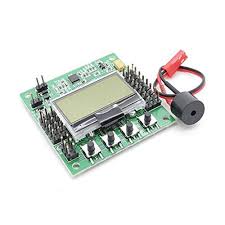
What are the key features of an advanced flight controller?
Advanced flight controllers are also equipped with powerful flight algorithms that contribute to smooth and precise flight. These algorithms can include PID (Proportional-Integral-Derivative) controllers, which dynamically adjust the drone’s flight response to minimize drift and optimize stability. The fine-tuning of these algorithms is critical for achieving smooth maneuvers, reducing oscillations, and ensuring the drone can handle complex flight patterns, such as racing or cinematic shots. The high level of customization available in these controllers allows users to tweak settings for various flying styles, making them adaptable to a wide range of applications.
In addition to flight control algorithms, advanced flight controllers often feature fail-safe mechanisms to protect the drone in case of system failure. These safety features include return-to-home functionality, which automatically triggers the drone to fly back to its takeoff location if it loses signal from the transmitter or experiences a low battery. Other fail-safes include automatic landing and low-voltage detection. These features ensure the safety of the drone and its surroundings, especially in critical operations or long-range flights where human intervention may be limited.
Connectivity is another vital feature of advanced flight controllers. Many modern controllers support various communication protocols such as Bluetooth, Wi-Fi, or even 4G/5G connectivity, allowing for remote control and monitoring of the drone from a distance. These features also enable real-time telemetry data to be transmitted to ground stations or mobile devices, providing the pilot with valuable insights about the drone’s performance, location, and status.
Finally, compatibility with external devices and systems is a significant advantage of advanced flight controllers. Many controllers can integrate with gimbals, cameras, LiDAR sensors, and other payloads, making them suitable for professional applications such as aerial photography, mapping, and surveying. This flexibility in payload integration broadens the scope of UAVs, allowing them to take on more specialized tasks.
In summary, an advanced flight controller is the heart of any drone system, providing the intelligence needed for stable and responsive flight. Its key features, including sensor integration, sophisticated flight modes, advanced algorithms, fail-safes, connectivity, and payload compatibility, make it indispensable for both recreational and commercial drone users. Whether used for aerial photography, surveying, or advanced research, the flight controller ensures that drones can perform reliably and efficiently in a variety of environments.